
- This event has passed.
Health Disparities Research Working Group | April 9, 2026 — Jesse Kaye, PhD
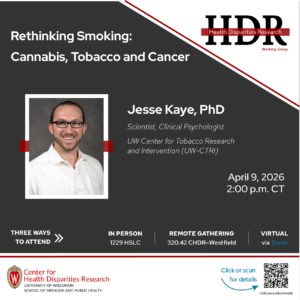
The Health Disparities Research Working Group welcomes Jesse Kaye, PhD as our featured presenter for April. Join us on Thursday, April 9 to learn about his work:
Rethinking Smoking: Cannabis, Tobacco and Cancer
About the Talk: Tobacco smoking remains the leading preventable cause of cancer, and tobacco cessation treatment has long been considered the pinnacle of cancer prevention. It is long overdue for tobacco cessation to be considered an essential element of quality cancer treatment, as quitting tobacco smoking after a cancer diagnosis has profound effects on survival, treatment response, and quality of life.
While the harms of cigarette smoking are well established, far less is known about cannabis use and its consequences, particularly in the context of cancer care. Evidence suggests that cannabis use might impede both motivation and ability to quit smoking tobacco cigarettes, which may, in fact, constitute one of the greatest health risks associated with cannabis use.
This presentation will review dissemination and implementation science efforts to increase the reach, accessibility, and equity of tobacco treatment in the context of cancer care and emerging clinical research priorities posed by the rising prevalence of cannabis use among patients with cancer.
Dr. Jesse Kaye is a clinical psychologist, a Scientist at the University of Wisconsin Center for Tobacco Research and Intervention (UW-CTRI), and a Member of the UW Cancer Prevention and Control Program within the Carbone Cancer Center. His research on tobacco, cannabis, and other substance use disorders focuses on understanding mechanisms that maintain addiction and using this knowledge to develop and implement more effective treatments. He examines psychological and neurobiological processes related to risk, etiology, and treatment common across addictive disorders. His research on tobacco addiction specifically aims to enhance smoking cessation treatment for populations who bear greater consequences from smoking, such as those who use other substances (e.g., alcohol, cannabis); live with mental illness; have chronic pain; have socioeconomic disadvantages; are incarcerated; or have cancer.

What is the HDRWG?